


12 am: I can hear “Lonely” by Akon. A reasonably good-looking Filipino woman with a strapless black halter and denim mini-skirt holds two baluts and takes a seat next to a man. She proceeds to shake his hand, introduce herself and then place her hand on his thigh. I am in Gegambak (which means spider in Tagalog). The dancers are amateurs. It is no strip club though. The women keep their clothes on. After Aron downs his last beer we walk back to the inn.
For the first time in days, I wake up at 10 am. Bliss. Today is the day that we all take a holiday from our holiday. Lunch is at Chowking Express. I was informed by the locals that Chowking is Filipino owned. The Pancit Canton tastes very much like Hokkien Mee.
Halo-Halo is the Filipino version of our ais kacang. It is shaved ice with ube (yam paste), oats, jelly pieces, beans and a host of other things. Feeza asks me, “Is that yam ah?” I thought she was trying to be Rastafarian and say “Ya Man”.
After lunch, my personal itinerary tells me it is time to resume chilling time by watching television. Some of us watched TV and some went to the black market. At 3 pm we met to rehearse our cultural performance and then we left to the CSC in UP Baguio. We look a strange bunch today (much stranger than how we usually look on the streets of Baguio) with some of us sporting sarongs around our waists.
We started with an icebreaker that Rommel and Chinee taught us. It was very similar to the dances we normally have at secondary school campfires. Dinner was satisfying. There was Filipino popiah, malakit (a sticky rice kuih), roast chicken, pancit and cream puffs. After dinner we proceeded to embarrass ourselves and we were repaid with laughter, smiles and claps from our gracious hosts.
We performed a dikir barat, a dance comedy and also presented a video entitled Kadhal Sagada (Sagada Romance). Our dikir barat singing of Rasa Sayang sounded pretty good to me and the Filipinos were quite amused with the backup singing for Feliz Navidad courtesy of Aron, Zeck, Max, Feeza and Temme. The laughter at the end of our dance comedy convinced me that we Monash students managed to put on a smashing performance. (Ed: the dance comedy was an absolutely fabulous performance that was prepared in about 10 minutes and everyone just jumbled ideas together and walah! We had a historical-dance-comedy) Look out for the link to Kadhal Sagada, its hilariously funny!
Our student guides put on a traditional song performance for us with accompanying footwork whilst Claire Daguio from Migrante and Ani Bungaoen from Ornus taught us an Igorot song. To end the night we were treated to a special video by Dr. Yeoh about our journey in the Cordilleras. It was very touching and left us feeling all warm and fuzzy inside.
Gifts were presented. Contact numbers and hugs were exchanged. The solidarity goal of the trip was a success.
There was leftover food and we decided to distribute it to those in need. While holding a huge tray of pancit, Max asked two male street vendors, “Do you all want pancit?” They shake their heads. Perhaps they think he was trying to sell them pancit. Eventually we gave the food to some street vendors with children.
By Grace

Wednesday, December 19, 2007

In the Still of the Night
The night life in Baguio City is rather interesting. Unlike most cities in Malaysia where the people are either out partying or staying at home, the people of Baguio have a different way of spending their nights.
The ever famous Session Road in Baguio City is not only the home to street vendors during the day, but also at night. At night, a whole new world unfolds in the streets of Baguio. Food and cloth peddlers are replaced with DVD sellers and child beggars. It’s not really a nice feeling when a child walks up to you and begs you for money. 1 Peso is not a big amount to give. However, when you give one, a whole colony of children will come begging from you as well.
Homeless people and scavengers are also seen going through trashes looking for recyclable items. Being in a third world country, it may seem a normal thing to the society living there. But most of us, found it hard to truly understand what was happening.
Nevertheless, we kept our spirits up as we explored the night life of the streets of Baguio. And eventually, we came across something or rather a place where most members of society would be against its establishment. It was a striper club. To be exact, a male strippers club.
The girls were really excited about it. But the guys were not. Anyway, we still went ahead to the stripper club. It was the first time for most of us. When we got there, the setting of the club was very Americanized and there was a cage-shaped podium where the strippers would perform.
The male strippers were not really gay strippers. They were heterosexual and were doing it for the good money. One of them said he was introduced into the business by a friend and later realized he was making a reasonably good amount of money. And they also said that they offer sexual services if they were asked depending on the amount of money offered.
The situation in the bar on the other hand was different for both the guys and girls. The guys were starting to feel a little uncomfortable seeing other men strip in front of them. Yet all was not lost as we were told that there was a female strip club just above the male one.
So, we, the guys went up. The female strip club was almost the same. Although, it had more performers. But it wasn’t really a nice show to view. We did get to see some strippers in action but we realize that most of them weren’t really happy doing it. It was like they were forced into doing it.
In the end, the night life in Baguio is definitely filled with lots of amazing things to do. It may not have the best night lifestyle in the region, but it’s different in its own way. And poverty is definitely a factor in all of this.
By Aron
The ever famous Session Road in Baguio City is not only the home to street vendors during the day, but also at night. At night, a whole new world unfolds in the streets of Baguio. Food and cloth peddlers are replaced with DVD sellers and child beggars. It’s not really a nice feeling when a child walks up to you and begs you for money. 1 Peso is not a big amount to give. However, when you give one, a whole colony of children will come begging from you as well.
Homeless people and scavengers are also seen going through trashes looking for recyclable items. Being in a third world country, it may seem a normal thing to the society living there. But most of us, found it hard to truly understand what was happening.
Nevertheless, we kept our spirits up as we explored the night life of the streets of Baguio. And eventually, we came across something or rather a place where most members of society would be against its establishment. It was a striper club. To be exact, a male strippers club.
The girls were really excited about it. But the guys were not. Anyway, we still went ahead to the stripper club. It was the first time for most of us. When we got there, the setting of the club was very Americanized and there was a cage-shaped podium where the strippers would perform.
The male strippers were not really gay strippers. They were heterosexual and were doing it for the good money. One of them said he was introduced into the business by a friend and later realized he was making a reasonably good amount of money. And they also said that they offer sexual services if they were asked depending on the amount of money offered.
The situation in the bar on the other hand was different for both the guys and girls. The guys were starting to feel a little uncomfortable seeing other men strip in front of them. Yet all was not lost as we were told that there was a female strip club just above the male one.
So, we, the guys went up. The female strip club was almost the same. Although, it had more performers. But it wasn’t really a nice show to view. We did get to see some strippers in action but we realize that most of them weren’t really happy doing it. It was like they were forced into doing it.
In the end, the night life in Baguio is definitely filled with lots of amazing things to do. It may not have the best night lifestyle in the region, but it’s different in its own way. And poverty is definitely a factor in all of this.
By Aron
Home
I packed my things.
I put my foot forward then the other.
One step…
Two steps...
Until I embarked on a sojourn.
I found myself exploring what I have
not seen back home.
Things beautiful, things amazing,
Things rare, things exciting.
I found the beauty of the unexplored
world and it soon enslaved me.
My untrained, much more, innocent eyes
began to drift in the impeccable
sight of the new world.
I found it faultless…
Pristine...
And I thought I was better-off roaming
the vast expanse of the seemingly
perfect place where my feet have led
me.
I yearned for a new kind of life
after I left my home where life was
muddled...
Where my soul was eternally restless...
Where thoughts collided with
feelings...
Where the mind almost always
functioned in disarrayed fashion…
I wandered...
I wandered...
As my journey away from home took time,
I saw the treachery of the
unknown world I was in.
There I was, beginning to feel tired and
lost in the idea of a better life in
an unknown realm.
I slept, thinking it would soon be
over.
With a gust of wind that blew against
my pale cheeks
and with raindrops, I woke up.
I knew I had to go back home.
It felt lost in a milieu
of a thousand chestnut trees, a
million birds and a hundred bees.
I had to find my way back
despite being clueless of how long it would
take.
With a little energy left, I leaped up
on my feet, ran as fast as I
could...
In the end, my eyes were blurred with
tears as darkness further weakened my
sight...
But a little spark of light changed
everything.
The little lamp that hung above the
doorstep did not burn out while I was
away...
The roof was a bit dingy,
The mats were new...
But much of it remained the same...
I know I am home...
*Finding your way back
home is always a delight to the heart
and a joy to the soul...
To the Monash students I have shared nine days with, may the Philippines be your second home.I will always be waiting for your return…
To the Monash students I have shared nine days with, may the Philippines be your second home.I will always be waiting for your return…
By Mau
Halal Food Hunt in Baguio and Sagada
Before the trip to the Philippines, I’ve had countless advices of - “do” and “do not” eat when I’m here from my parents. Packed with lots of everyday emergency food items like cup noodles, Campbell soup packets and biscuits, I was ready to be a survivor in a foreign land. Not forgetting, I packed along the thermos for boiling water to cook the noodles and soups. Yes, people, you can call me ‘kiasu’. But it came in very handy. My room became famous for emergency food supplies.
Being mentally prepared not to easily find Halal food, my buddy (Feeza) and I had to go surveying restaurants, food stalls etc. Days past; the truth was that I couldn’t bear to eat any more junk food as my real meals. Till now, I'm constantly craving for home cooked food, mamak food etc.
The first day we had Fillet-O-Fish for dinner. We ate there after interviewing the manager for a few minutes, asking whether the fish burger was cooked together or separately from other meats like beef and chicken. He said that it was cooked separately. The manager also said that they do not serve pork in McDonalds and thus Muslims can go there too. We were convinced that we had come to the right restaurant. McDonalds was the first restaurant in Baguio where we could have our first decent meal.
Back in Sagada, I think we had a few choices to choose from. I’ve tried the vegetable fried rice and vegetable pasta. I think I had too much vegetables, very unlike what I always have back home.
All in all, I became a vegetarian here. Like Feeza always says, “We’re becoming like goats”, and she would do the sound of a goat. On the bright side, I think in a way it’s good to eat vegetables daily as it’s good for digestion and good for the bowel as well.
Truthfully, it’s hard to find Halal food here. Feeza and I had to constantly ask the person in charge of the place how the food is to be cooked. In Baguio, when the Muslim leaders came here to have the discussion. I asked them of places where we could find Halal food. They said that we could find them at the market which opens from 7 a.m. to 7 p.m. But the hard thing was that we were out by 7 a.m. on most days and only back after 7 p.m. so the only choices left was McDonalds and of course my food stock, which I was very tired of eating. That was the experiences I’ve had of my first few days in Baguio.
Just now, I wanted to try ‘Halo-Halo', the local desert. It’s similar to our local dish of ‘ice-kacang’ back home. So the gang and I went to ‘Chowking’ and interviewed the manager in charge at that time about the food available there. As a result, the restaurant became the second one where we could find our fish dishes.
Apart from the fish and vegetarian food I could eat, I bought bread, cookies and potato chips as well.
I realized how lucky I am to be living in a multi religious and multi racial country (Singapore!) where people understand my culture and religion. There are sections for Halal and Non-Halal food. Gosh, I miss my ‘nasi lemak ayam’! I’m mentally preparing myself for the first chicken I want to have upon returning to Malaysia (via Air Asia), that is ‘nasi lemak ayam’ on the plane!
By Alia
Being mentally prepared not to easily find Halal food, my buddy (Feeza) and I had to go surveying restaurants, food stalls etc. Days past; the truth was that I couldn’t bear to eat any more junk food as my real meals. Till now, I'm constantly craving for home cooked food, mamak food etc.
The first day we had Fillet-O-Fish for dinner. We ate there after interviewing the manager for a few minutes, asking whether the fish burger was cooked together or separately from other meats like beef and chicken. He said that it was cooked separately. The manager also said that they do not serve pork in McDonalds and thus Muslims can go there too. We were convinced that we had come to the right restaurant. McDonalds was the first restaurant in Baguio where we could have our first decent meal.
Back in Sagada, I think we had a few choices to choose from. I’ve tried the vegetable fried rice and vegetable pasta. I think I had too much vegetables, very unlike what I always have back home.
All in all, I became a vegetarian here. Like Feeza always says, “We’re becoming like goats”, and she would do the sound of a goat. On the bright side, I think in a way it’s good to eat vegetables daily as it’s good for digestion and good for the bowel as well.
Truthfully, it’s hard to find Halal food here. Feeza and I had to constantly ask the person in charge of the place how the food is to be cooked. In Baguio, when the Muslim leaders came here to have the discussion. I asked them of places where we could find Halal food. They said that we could find them at the market which opens from 7 a.m. to 7 p.m. But the hard thing was that we were out by 7 a.m. on most days and only back after 7 p.m. so the only choices left was McDonalds and of course my food stock, which I was very tired of eating. That was the experiences I’ve had of my first few days in Baguio.
Just now, I wanted to try ‘Halo-Halo', the local desert. It’s similar to our local dish of ‘ice-kacang’ back home. So the gang and I went to ‘Chowking’ and interviewed the manager in charge at that time about the food available there. As a result, the restaurant became the second one where we could find our fish dishes.
Apart from the fish and vegetarian food I could eat, I bought bread, cookies and potato chips as well.
I realized how lucky I am to be living in a multi religious and multi racial country (Singapore!) where people understand my culture and religion. There are sections for Halal and Non-Halal food. Gosh, I miss my ‘nasi lemak ayam’! I’m mentally preparing myself for the first chicken I want to have upon returning to Malaysia (via Air Asia), that is ‘nasi lemak ayam’ on the plane!
By Alia
Preserving the Traditional Igorot's Weaving Culture

A tourist should not leave Baguio city without first paying a visit to the Easter Weaving Room, Inc. (EWR Inc.) that was established since 1908. Unlike other weaving workshops in the Philippines, Easter Weaving Room is open to the public for visits from 8am - 5pm. Tourists who pay a visit to this centre will gain an insight to the process of making weaving products. EWR Inc.'s mission is to uphold the traditional method of weaving using manual looms instead of machines in order to maintain the sense of authenticity. Anne Hargreave, a missionary academic of Easter School unleashed the amazing weaving skills of female students who hailed from Mt. Province by incorporating the weaving curriculum into Home Economics.
Due to the use of traditional weaving methods, EWR Inc. faces obstacles in meeting the demands from customers and business partners because their factory cannot churn out mass productions. In addition, the cotton farming industry in the Philippines is non-existent therefore suppliers in Manila have to import raw cotton in order to manufacture threads for weaving. These threads are then transported to Easter Weaving Room in Baguio City. Due to the distance and the seasonal complications, many tourists choose not to visit Baguio and thus business prospects are affected as a result. Despite these challenges, EWR Inc. still continues to preserve the Cordillera culture, particularly the weaving heritage, by serving as a mechanism to market native handicrafts as well as establishing a sanctuary for the enhancement of indigenous Igorot skills. This corporation even exports goods to America, Australia, Europe, Japan, New Zealand and Canada.

The making of a final product entails an incredibly patient and meticulous worker. First of all, the primary step of weaving is warping. The warping machine serves as a set of lengthwise yarns through which the weft is woven. Each individual warp thread in a fabric is vital to produce threads. The weft is the yarn that is woven back and forth through the warp to make cloth. Thereon, winding is conducted by 2 workers as a process of thickening fine threads. During the threading process, each line of thread is inserted into individual holes followed by skilful weaving techniques in order to produce materials for sewing end products. These include place mats, shawls, mufflers, scarves, neckties, coats, books, bags, belts and such.
As I walked around the workshop, I interviewed workers to find out whether they have been paid reasonably. All workers have a day off based on duty rotation throughout the week. They work from 8am - 5pm. Lunch time is at noon. However, most of them push themselves to produce as many weaving materials as possible because time is money. For every material they manage to churn out, the workers are paid by final amount of completed products. Therefore, salaries among workers vary depending on how capable they are in being productive. An average monthly pay check never goes below 2200 pesos. According to Elena, a 58-year-old warping worker, she believed that as long as Filipinos work hard, they should be able to make a living. With all the pressing labour exploitation controversies upon multinational fashion corporations like Arcadia that owns fashion stores like Topshop and Ms Selfridge, at least Easter Weaving Room Incorporation is doing Cordillera's indigenous weaving traditions proud. Not only do they promote authentic weaving techniques but they also exercise corporate social responsibility by not exploiting means of labour.

By Jasmine Chew
Tuesday, December 18, 2007
Day 7: Back to Baguio
At 6:30am, the elite group boarded the bus from Sagada back to Baguio. It was time to say goodbye to fresh air and Echo Valley, hot tour guides and very affordable weaving products.
Although Feeza thought that the journey back was terrible and when we reached Baguio the dust was worst than Sagada, deep in all of us we had the same four words as Feeza.
“I miss Sagada already.”
Back in Session Road, Baguio, Aron was contented.
“Finally I ate a fine Chinese meal at Chow King! (Spicy Fried Rice with siomai)”
For Pooi Yarn, having Spicy Wanton Noodle Soup for the first time since arriving in the Philippines really made her miss home.
Jasmine Chew indulged in the FTV (Fashion TV) Channel and shopping at SM Mall. Meanwhile, some of the others shopped at the local market.
Maxine and Zeck loved the market. “A shopaholic’s paradise! Better learn to bargain and bargain fast!” Maxine’s bargaining skills could be heard from a couple of stores down the alley. “There are so many things to buy at the market and I’m into indigenous stuff so it’s a perfect place for me to go!” says Zeck displaying a new collection or so every day or two.
After a long search, Linda even found the Balisong knife she had been looking for! However, Max Tan has a piece of advice for all travelers here:
Max: “It’s dangerous to shop in Baguio. There are many imitation goods.”
Some people: …
…went for night entertainment at night...
For Grace and Jojo, it was their first time seeing male strippers.
“Interesting…” Grace definitely saw much more than she counted on.
Jojo spent her 21st birthday there. She felt the guys-in-underwear were “so close to her”.
That same night, Susan thought she was at the Baguio Zoo. “I felt really bad for the male dancers because they danced to us like caged animals.”
Meanwhile, our Cultural Director gave her thoughts about their performance standard. “I think some of the male entertainers are really hot! I admire their flexibility and their dancing moves!”
Erica interacted with the entertainers there for the inside stories. “I was surprised to find that the male entertainers are straight and most of them are single parents.”
What does 1300-13-1300 taste like in Baguio?
“Not as good as Malaysia.” It was Shu Yi’s first time trying McDonalds in the Philippines. The primary reason being the lack in variety.
“I tried Jollibee and the sauce for the spaghetti tasted like sambal!” Melissa, our chaperone identified Malaysian tastes in the food. For me, spaghetti would no longer be limited to just what we normally eat as the typically Italian dish..
Prof. Daniel didn’t really mind where he ate.
“I had dinner with Baguio friends whom I hadn’t seen in one and a half years!” The anticipated reunion was the highlight of his day.
For Alia and Temme, satisfying the lowest level in Maslow’s Hierarchy of Needs had never felt better.
“Yesterday night was the best slept I had since I arrived!” Alia is not shy to proclaim her immense interest in, sleep.
Temme slept for 12 hours straight. “It felt good to finally sleep for a long long time!”
A good night’s sleep only left us eager to embrace the new day ahead. I couldn’t wait!
By Mindy
Although Feeza thought that the journey back was terrible and when we reached Baguio the dust was worst than Sagada, deep in all of us we had the same four words as Feeza.
“I miss Sagada already.”
Back in Session Road, Baguio, Aron was contented.
“Finally I ate a fine Chinese meal at Chow King! (Spicy Fried Rice with siomai)”
For Pooi Yarn, having Spicy Wanton Noodle Soup for the first time since arriving in the Philippines really made her miss home.
Jasmine Chew indulged in the FTV (Fashion TV) Channel and shopping at SM Mall. Meanwhile, some of the others shopped at the local market.
Maxine and Zeck loved the market. “A shopaholic’s paradise! Better learn to bargain and bargain fast!” Maxine’s bargaining skills could be heard from a couple of stores down the alley. “There are so many things to buy at the market and I’m into indigenous stuff so it’s a perfect place for me to go!” says Zeck displaying a new collection or so every day or two.
After a long search, Linda even found the Balisong knife she had been looking for! However, Max Tan has a piece of advice for all travelers here:
Max: “It’s dangerous to shop in Baguio. There are many imitation goods.”
Some people: …
…went for night entertainment at night...
For Grace and Jojo, it was their first time seeing male strippers.
“Interesting…” Grace definitely saw much more than she counted on.
Jojo spent her 21st birthday there. She felt the guys-in-underwear were “so close to her”.
That same night, Susan thought she was at the Baguio Zoo. “I felt really bad for the male dancers because they danced to us like caged animals.”
Meanwhile, our Cultural Director gave her thoughts about their performance standard. “I think some of the male entertainers are really hot! I admire their flexibility and their dancing moves!”
Erica interacted with the entertainers there for the inside stories. “I was surprised to find that the male entertainers are straight and most of them are single parents.”
What does 1300-13-1300 taste like in Baguio?
“Not as good as Malaysia.” It was Shu Yi’s first time trying McDonalds in the Philippines. The primary reason being the lack in variety.
“I tried Jollibee and the sauce for the spaghetti tasted like sambal!” Melissa, our chaperone identified Malaysian tastes in the food. For me, spaghetti would no longer be limited to just what we normally eat as the typically Italian dish..
Prof. Daniel didn’t really mind where he ate.
“I had dinner with Baguio friends whom I hadn’t seen in one and a half years!” The anticipated reunion was the highlight of his day.
For Alia and Temme, satisfying the lowest level in Maslow’s Hierarchy of Needs had never felt better.
“Yesterday night was the best slept I had since I arrived!” Alia is not shy to proclaim her immense interest in, sleep.
Temme slept for 12 hours straight. “It felt good to finally sleep for a long long time!”
A good night’s sleep only left us eager to embrace the new day ahead. I couldn’t wait!
By Mindy
Children in Baguio & Sagada
Baguio may not be a bustling metropolitan city but it is a relatively busy city with its own standards of living and attractions. In the Philippines, a large majority of its population live in poverty. This is not an exception in Baguio as well. One of the things that stand out is the number of street vendors selling their goods by the roadside. Even more noticeable is the crowd of children asking for money in the streets or some selling goods with their parents.
It is not unusual for parents to bring their children along while they wait patiently by the roadside for someone to buy their items. Many children are seen loitering around the whole day, with nothing to do but to help their parents to gain more business. Some of the parents, mainly women, would be cradling a baby in one hand and guarding the stall while their children wander off to get people to buy their things. A couple of children who were selling plastic bags in the market approached me to buy their bags.
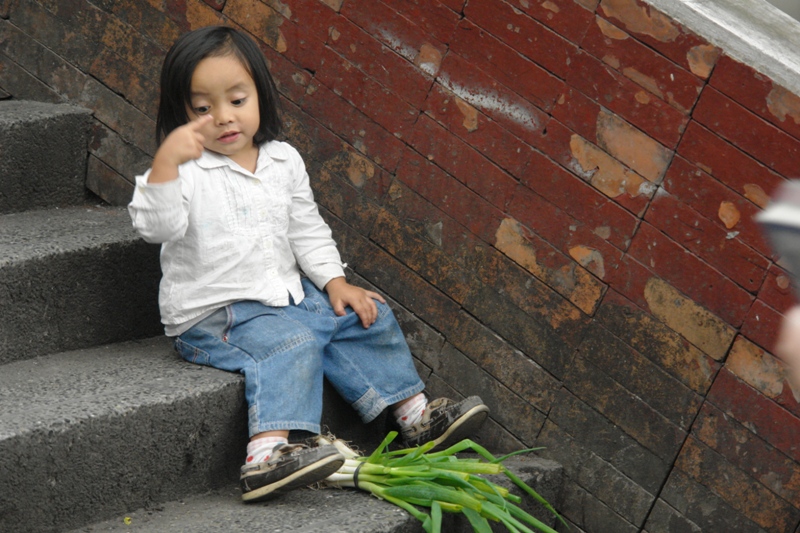
Another common sight would be of the children asking for money with their arms outstretched. They have nothing to sell but sometimes they would exchange your money for services. Personally, I come across some that would sing Christmas carols to you or others that offer to carry your bags or groceries for a donation from you.
Similarly, when we arrived in Sagada, we were also greeted with sights of children on the streets. The only thing different here is that the children are playing among themselves, creating their own activities and basically acting like how children should be. This was unlike in Baguio where the children sometimes take over the mother’s role of selling the goods while she takes care of her baby.
The children here enjoy gathering, just talking or playing. One of the activities that caught my eye is a game of baseball played by an all-girls team. They were all relatively young, probably in their pre-teens. There were not enough members to form a proper team and not even the lack of equipment could deter them from playing. Armed with bats and a pine cone as the ball, they cleverly altered the rules of the game to suit their numbers.
Here, the children seemed much happier and contented although the life is harsh and simple. They have the freedom to follow their parents around or to mingle with the other children. Unlike in Baguio, most of those who take to the streets do not even have that choice in the first place. Probably this is the difference between living in a cold and relatively fast paced city and a quieter, more community based village. Nevertheless, the children from these both places have their own charms and uniqueness.
By Pooi Yarn
It is not unusual for parents to bring their children along while they wait patiently by the roadside for someone to buy their items. Many children are seen loitering around the whole day, with nothing to do but to help their parents to gain more business. Some of the parents, mainly women, would be cradling a baby in one hand and guarding the stall while their children wander off to get people to buy their things. A couple of children who were selling plastic bags in the market approached me to buy their bags.
Another common sight would be of the children asking for money with their arms outstretched. They have nothing to sell but sometimes they would exchange your money for services. Personally, I come across some that would sing Christmas carols to you or others that offer to carry your bags or groceries for a donation from you.
Similarly, when we arrived in Sagada, we were also greeted with sights of children on the streets. The only thing different here is that the children are playing among themselves, creating their own activities and basically acting like how children should be. This was unlike in Baguio where the children sometimes take over the mother’s role of selling the goods while she takes care of her baby.
The children here enjoy gathering, just talking or playing. One of the activities that caught my eye is a game of baseball played by an all-girls team. They were all relatively young, probably in their pre-teens. There were not enough members to form a proper team and not even the lack of equipment could deter them from playing. Armed with bats and a pine cone as the ball, they cleverly altered the rules of the game to suit their numbers.
Here, the children seemed much happier and contented although the life is harsh and simple. They have the freedom to follow their parents around or to mingle with the other children. Unlike in Baguio, most of those who take to the streets do not even have that choice in the first place. Probably this is the difference between living in a cold and relatively fast paced city and a quieter, more community based village. Nevertheless, the children from these both places have their own charms and uniqueness.
By Pooi Yarn
Subscribe to:
Posts (Atom)
